
You know that the true rarity of coins is one of the most difficult parts of numismatics. Many beginners rely on first impressions or assume that old coins must be scarce. Others believe that a high mintage automatically means low value.
In practice, rarity depends on more factors than age or production numbers. Even basic steps, such as coin identification, may suggest that a piece looks interesting, yet the real market picture can be completely different.
Collectors use metal data, weight ranges, and catalogue notes to build expectations; however, rarity is formed through survival, demand, grading pressure, and long-term availability. Here, we would like to consider seven counterintuitive facts that change how rarity is evaluated and why certain coins behave unpredictably on the market.
Why Most People Misunderstand Rarity
Collectors often overestimate rarity because they rely on visible traits. A coin that looks old feels rare. A coin that does not appear in circulation must be scarce. A coin with a low mintage sounds valuable. Yet each of these impressions ignores deeper structures.
- Mintage does not equal rarity. Production numbers do not accurately reflect the number of coins that survive.
- Age does not predict scarcity. Ancient coins may be abundant, while modern errors can be genuinely rare.
- Absence in circulation is not evidence. Many coins disappear simply because people saved them.
- Low price does not prove availability. Some coins have a steady supply and weak demand.
- High price does not prove rarity. Some expensive pieces are common but popular.
These misconceptions form the basis for overpayment and unrealistic expectations. Real rarity depends on survival rates, grade availability, certified populations, and collector interest.
Seven Counterintuitive Facts About Coin Rarity (With Real Examples)
Rarity forms through survival, condition, and demand. These factors work together and often contradict common assumptions. The following seven points show how scarcity appears in practice and why numbers printed in mint reports rarely reflect what the market experiences today.
High Mintage Does Not Always Mean “Common”
A large production figure can mislead new collectors. Scarcity often appears only in the upper grades, where even small flaws reduce the count sharply.
Example: The 1919 Lincoln Wheat Cent had over 392 million struck. Few survive with clean surfaces, full luster, and minimal marks. MS65 and MS66 coins sell for strong premiums.
The 1931-S Lincoln Cent had only 866,000 minted, yet many were saved, making high-grade examples easier to locate.
Quick comparison:
| Date | Mintage | High-Grade Availability |
| 1919 | 392,021,000 | Low (true scarcity in MS) |
| 1931-S | 866,000 | Moderate (roll saving) |
The market rewards scarcity in top condition, not sheer volume.

Low Mintage Does Not Guarantee High Value
A small mintage attracts attention only when enough collectors care about the series. Without demand, even low-population issues remain inexpensive.
Example: The 1982 Washington Commemorative Half Dollar has a limited mintage but weak market traction. Many buyers see commemorative halves as souvenirs, not targets for long-term collecting. High-grade pieces remain inexpensive because interest is thin.
Typical pattern:
- Small collector base → weak demand
- Weak demand → slow sales
- Slow sales → stable, low values
Production numbers matter less than audience size.
Survival Rate Matters More Than Production Numbers
Mint reports show what was struck, not what survived. Losses through melting, circulation, and storage create real rarity.
Example: The 1877 Indian Head Cent has a moderate mintage, yet very few original coins remain. Heavy circulation left the series with minimal high-grade survivors. By contrast, the 1922 Peace Dollar had a high mintage, but large quantities were melted in later silver withdrawals. True availability in original bags is much lower than the printed figure suggests.
Factors that reduce survival:
- Melting during metal recalls
- Long periods of circulation
- Poor storage conditions
Rarity comes from survival, not production.
Age Does Not Predict Rarity
Old coins are not automatically scarce. Many ancient and medieval coins survive in large hoards, while some modern varieties exist in tiny numbers.
Example: Roman bronze coins (often over 1,600 years old) are abundant. Many sell for $10–$40 because excavations and hoard dispersals keep supply high. Meanwhile, the 2004-D Wisconsin Quarter “Extra Leaf Low” is a modern variety that can sell for hundreds due to genuine scarcity and strong interest.
Age vs value (simplified):
| Coin Type | Age | Market Availability |
| Roman bronze | 1600+ years | High |
| WI Extra Leaf Low | ~20 years | Low |
Rarity follows demand and survival, not age.
Rarity Does Not Equal Liquidity
Some coins are rare but still hard to sell because few collectors pursue the denomination or series.
Example: The 1875-CC Twenty Cent Piece is scarce, especially in original, problem-free condition. Yet the twenty-cent series has a small following, so demand is limited. The market moves slowly, and prices remain softer than expected. The 1955 Doubled Die Lincoln Cent shows the opposite. It is rare, but demand is huge. Liquidity is strong, and certified examples sell quickly.
Main difference:
- Rarity without demand → slow sales
- Rarity with demand → high liquidity
Rarity supports value only when buyers exist.
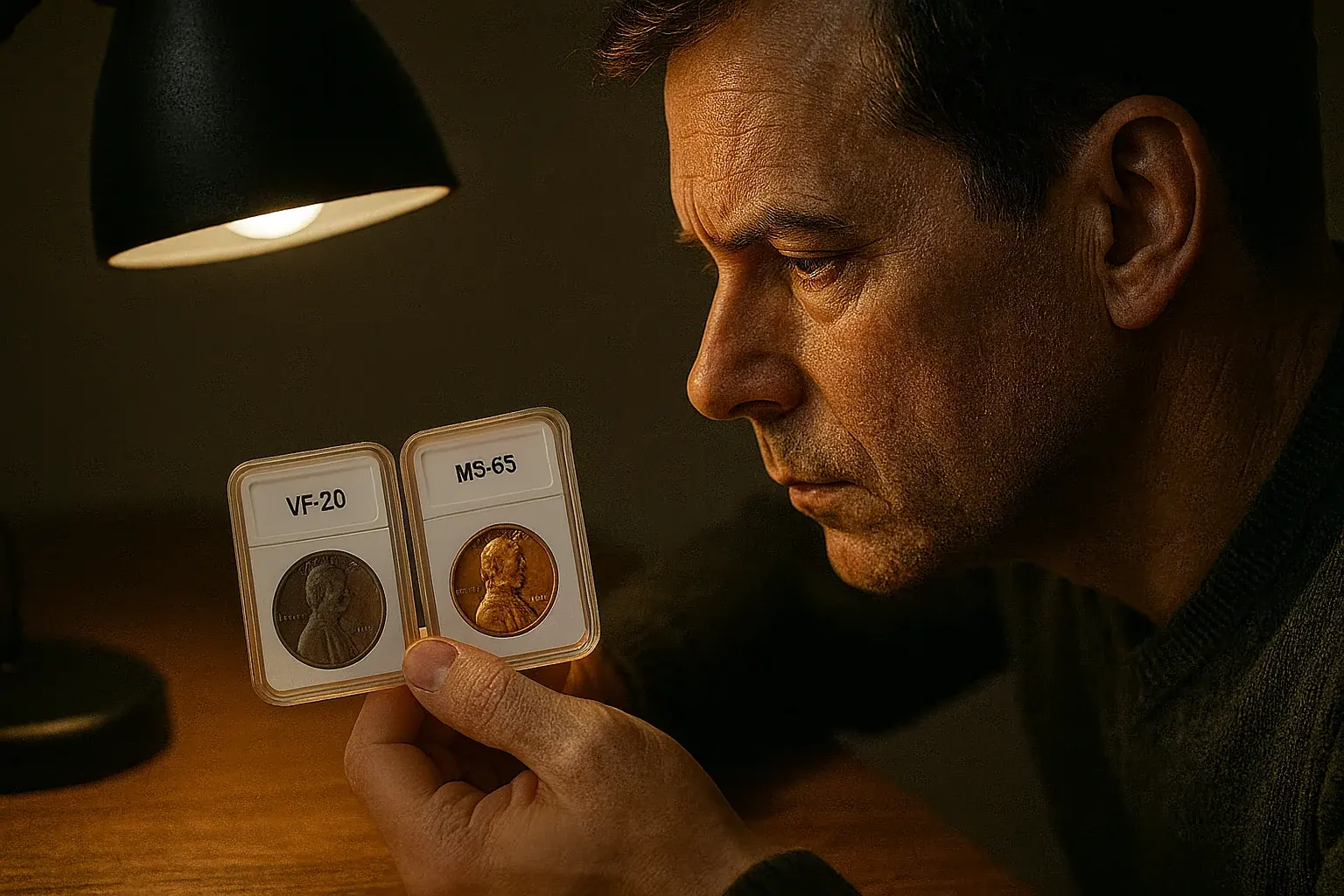
Condition Creates Its Own Type of Rarity
A common coin can become rare in top grades because circulation damage, weak strikes, and storage issues eliminate many high-quality survivors.
Example: The 1969-D Lincoln Cent is everywhere in lower grades, but MS67 RD coins are extremely scarce. Small marks, fading color, and strike weakness reduce the population. The 1941-S Walking Liberty Half Dollar had high production, yet MS65 and MS66 examples are limited due to soft strikes and handling.
Common causes of grade scarcity:
- Weak strike
- Early circulation wear
- Bag marks
- Poor storage
Collectors who track grade rarity avoid overpriced low-grade material and focus on truly scarce high-grade coins.
Hoarding Can Hide or Create Rarity
Public behaviour during release heavily affects today’s supply. Some coins appear scarce because they vanished into household storage, not because they were produced in small numbers.
Example: State Quarters seem uncommon in circulation today, but millions sit untouched in drawers, rolls, and albums. The apparent scarcity in pockets does not reflect true availability. The 1921 Peace Dollar shows the opposite. It was not widely saved. Many were circulated or melted, leading to limited high-grade survivors and strong interest today.
Hoarding impact:
- Mass saving → inflated supply later
- No saving → genuine long-term scarcity
Hoarding patterns shape perceived and actual rarity.
Why These Misconceptions Persist
Many misunderstandings come from family stories, online listings, or incomplete references. Sellers often describe coins as rare without considering population reports or real demand. New collectors rely on age, first impressions, or assumed scarcity instead of measurable data.
Digital tools help reduce confusion. A coin scanner app gives quick classification, but rarity must still be confirmed through survival estimates and market research.
Coin ID Scanner helps with identification, series attribution, and basic parameters before deeper study. Correct attribution prevents confusing common issues with actual rarities.
How to Evaluate Rarity Correctly
A structured approach eliminates many beginner errors:
- Compare mintage with survival estimates rather than relying on one number.
- Check population reports for grade distribution.
- Look at auction archives to understand how demand shapes price.
- Study how varieties affect availability within a series.
- Consider whether the collector base is active and stable.
- Review the hoarding history for each date or series.
- Identify whether rarity comes from grade scarcity, variety scarcity, or genuine low survival.
A rarity assessment becomes reliable only when these factors work together.
Why Counterintuitive Facts Matter
Collectors who rely on instinct often misjudge value. Coins that appear rare may be abundant once graded populations are reviewed. Coins that look common may be scarce in specific grades. Misconceptions lead to overpaying, poor long-term planning, and missed opportunities.
Understanding the counterintuitive side of rarity allows collectors to:
- Avoid hype-driven purchases;
- Identify real low-survival issues;
- Focus on series with stable demand;
- Build collections with predictable long-term performance.
Correct interpretation of rarity protects the budget and improves decision-making across all series.
Closing Notes: Rarity Works Differently Than Most Expect
Rarity is a product of survival, demand, grade distribution, hoarding history, and long-term collector interest. Age, appearance, or mintage tell only part of the story. Beginners gain confidence when they replace assumptions with structured evaluation and real market data.
Remember that digital tools can do part of your numismatic work: the free coin identifier app helps classify coins quickly and even check their current values, but rarity always depends on deeper research and stable demand. A collector who understands these principles avoids common mistakes and recognises true scarcity even in complex series.